
Best stackable food storage containers are one of the simplest ways to maximize space in a small kitchen.
Most small kitchens don’t actually lack storage — they lack structure. Take a look inside your cabinets. You’ll often see containers scattered side by side, leaving a large gap above them that never gets used. Over time, that unused vertical space turns into clutter, even if you don’t own that many items.
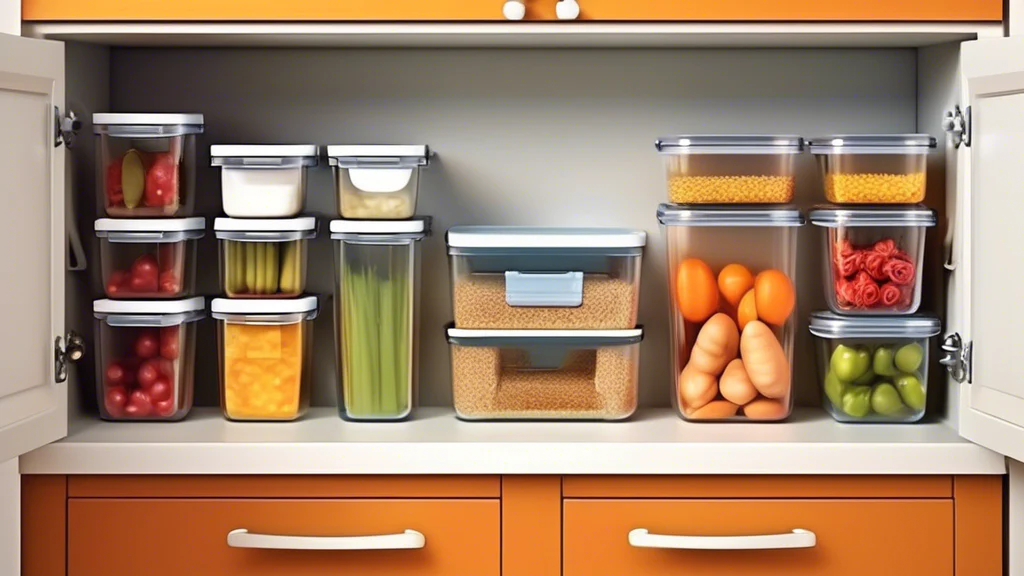
The problem isn’t how much space you have — it’s how you’re using it. In most cases, people try to fix this by buying more containers, but that usually makes things worse. Different shapes don’t stack properly, lids take up extra room, and items end up buried under each other.
That’s why kitchens feel messy even when they shouldn’t.
If you’ve ever struggled with limited space, choosing the right kitchen storage containers for small spaces can make a bigger difference than simply adding more storage.
The real solution is building a system — not adding more pieces. And that system starts with vertical storage. Proper food storage practices recommended by food safety organizations can help extend shelf life and reduce contamination.
Instead of spreading items across your cabinets, you stack them in layers. This allows you to use every inch of available space while keeping everything visible and easy to access. That’s exactly what stackable food storage containers are designed for.
Once you start thinking in terms of vertical storage, the next step is choosing the right types of containers.
Not all containers work the same way. Some are better for grouping everyday items, while others are designed for long-term food storage. In most small kitchens, using a combination of both works best — for example, open bins for quick access and sealed containers for ingredients that need to stay fresh.
For example, if you’re organizing dry ingredients, pairing stackable containers with airtight containers for pantry organization often works best. For a more consistent setup, modular containers can also help everything fit together more cleanly, making your kitchen easier to organize over time.
At this point, the goal isn’t to find more containers — it’s to find the right ones that work well together. Some setups need quick-access bins for daily use, while others need airtight containers to keep ingredients fresh. In many cases, combining both gives the best results.
The key is choosing containers that stack efficiently as a system — not just individually. Once you get this right, your kitchen becomes much easier to manage.
With that in mind, here are some of the best stackable food storage containers for organizing small kitchens efficiently.
Quick Picks (Best Stackable Options)
If you don’t want to read the full guide, here are the best stackable food storage containers based on different needs:
- Best Overall: Snapware Total Solution Containers — strong stacking stability with durable glass construction
- Best Budget Option: Freshware Meal Prep Containers — lightweight, easy to stack, and great for daily use
- Best for Meal Prep: ComSaf Glass Meal Prep Containers — uniform design makes stacking clean and efficient
- Best for Flexibility: MCIRCO Glass Containers — multiple sizes for different storage needs while still stackable
- Best for Long-Term Use: Razab Glass Containers — durable build with stable stacking over time
Comparison Table
| Product | Best For | Type | Stack Level | Airtight |
|---|---|---|---|---|
| LocknLock Easy Essentials | Everyday use | Plastic container | High | ⚠️ |
| Snapware Total Solution | Durability & stability | Glass container | High | ⚠️ |
| FineDine Glass Containers | Long-term structure | Glass container | High | ⚠️ |
| ComSaf Meal Prep Containers | Meal prep | Glass container | High | ⚠️ |
| MCIRCO Glass Containers | Flexible storage | Glass container | Medium | ⚠️ |
| Freshware Meal Prep Containers | Batch cooking | Plastic container | High | ❌ |
| Vtopmart Containers | Organized layout | Plastic container | High | ⚠️ |
| Razab Glass Containers | Heavy-duty use | Glass container | High | ⚠️ |
8 Best Stackable Food Storage Containers
1. LocknLock Easy Essentials Food Storage Containers
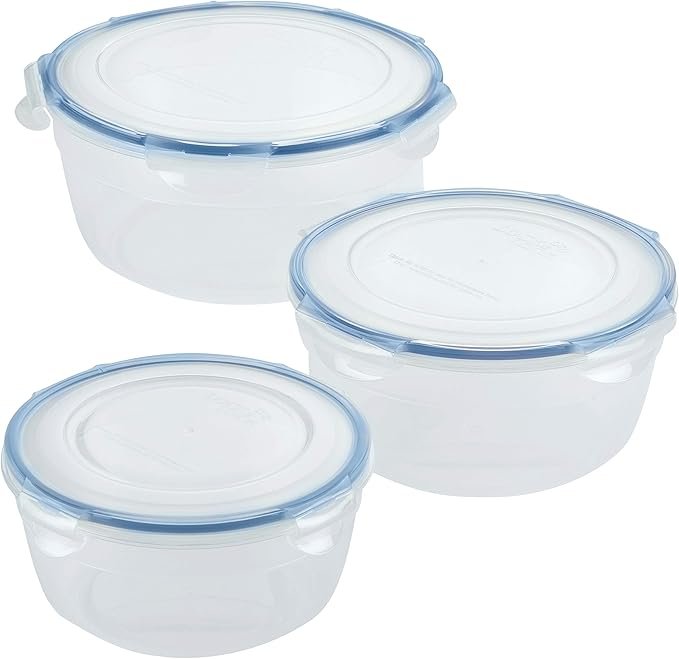
LocknLock Easy Essentials containers are built for simplicity. Their rectangular shape makes stacking straightforward, especially when you’re storing everyday items like leftovers or cooked meals – typical of plactic food storage containers designed for convenience. Instead of dealing with mismatched sizes, everything lines up cleanly, which helps reduce wasted space inside cabinets.
They’re particularly useful if your kitchen feels cluttered even when you don’t have that many items. By stacking containers vertically, you create a structure that’s easier to manage and quicker to access.
If you’re looking for one of the best stackable food storage containers to start organizing a small kitchen without overthinking the setup, this is a practical choice.
Best for: Everyday storage with minimal setup
Pros: Easy to stack, lightweight, simple to use
Cons: Basic materials, not built for heavy-duty use
2. Snapware Total Solution Containers
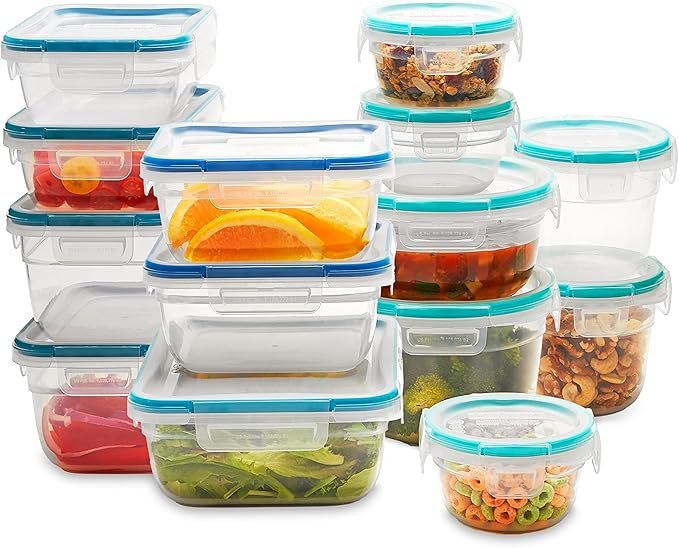
Snapware containers approach stacking differently by using glass bases instead of lightweight plastic. That extra weight changes how the containers behave when stacked — they stay in place more reliably, even when you pull something from the middle.
Another detail that makes a difference is the lid design. The flat surface allows containers to sit evenly on top of each other, which reduces the chance of uneven stacks collapsing over time.
They’re a good fit if your current setup feels unstable and you want something that holds its structure better without constant readjustment.
Best for: Stable stacking in cabinets and fridge
Pros: Solid base, good alignment, durable
Cons: Heavier, less convenient to move frequently
3. FineDine Glass Food Storage Containers
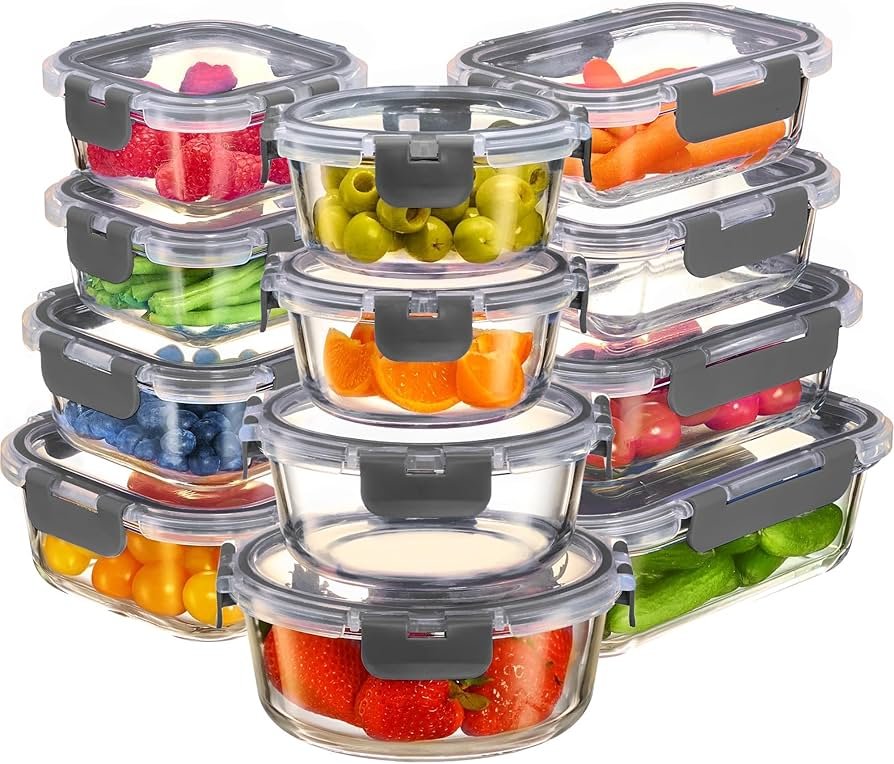
FineDine containers lean heavily toward durability, and that directly affects how they perform when stacked. The thicker glass base gives each container more weight, which helps prevent shifting once you build vertical layers.
In everyday use, this means you can stack multiple containers in cabinets or the fridge without worrying about everything sliding around when you take one out. That added stability makes them one of the best stackable food storage containers for people who prefer a more fixed and reliable setup.
They’re especially useful if your kitchen setup doesn’t change often and you want something that stays organized without constant adjustments.
Best for: Stable, long-term organization
Pros:
- Heavier glass improves stacking stability significantly
- Feels solid and durable compared to lightweight alternatives
- Works well in both cabinets and fridge environments
- Maintains structure even with frequent use
Cons:
- Heavier to handle, especially when stacked in multiple layers
- Less convenient if you frequently rearrange storage
- Requires careful handling to avoid damage
4. ComSaf Glass Meal Prep Containers
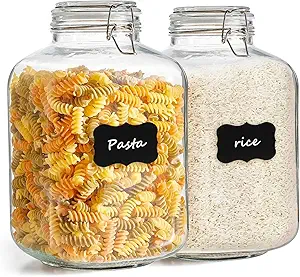
ComSaf containers are built around uniform sizing, which makes them especially effective for stacking. When every container shares the same footprint, creating vertical layers becomes almost automatic.
This is particularly helpful for meal prep containers for small kitchens, where consistent sizing makes stacking and portinoing much easier. Instead of mixing different shapes and sizes, you end up with a clean, repeatable system that’s easy to maintain.
The trade-off is flexibility. If you often store items of different sizes, you may need additional containers to cover those use cases.
Best for: Structured meal prep setups
Pros: Consistent sizing, clean stacking, easy to manage
Cons: Limited flexibility, fixed format
5. MCIRCO Glass Food Storage Containers
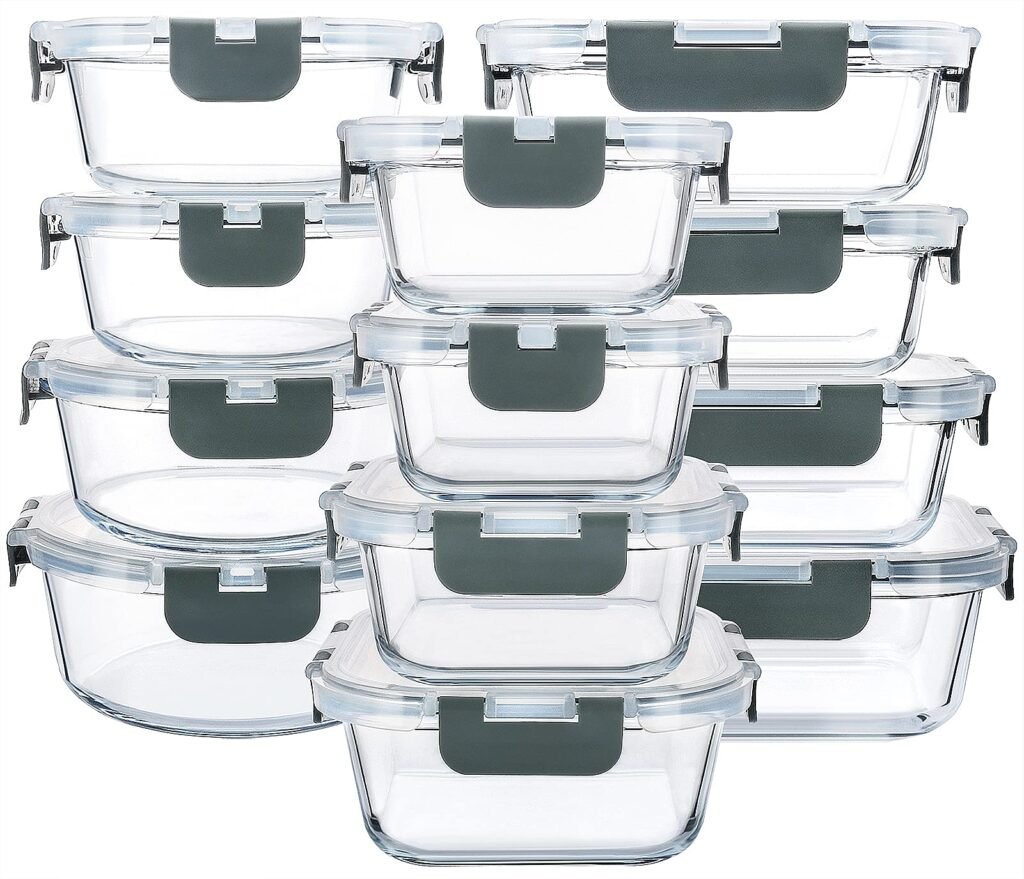
MCIRCO offers more variety in sizing, which gives you flexibility when storing different types of food. You’re not limited to one format, so it’s easier to adapt to changing needs.
Stacking still works, but it requires a bit more intention. Grouping similar sizes together helps maintain a clean structure, while mixing them randomly can lead to uneven layers.
It’s a good middle-ground option if you want both organization and flexibility without committing to a rigid system.
Best for: Mixed storage needs
Pros: Multiple sizes, adaptable, decent stacking
Cons: Less uniform, requires some organization effort
6. Freshware Meal Prep Containers
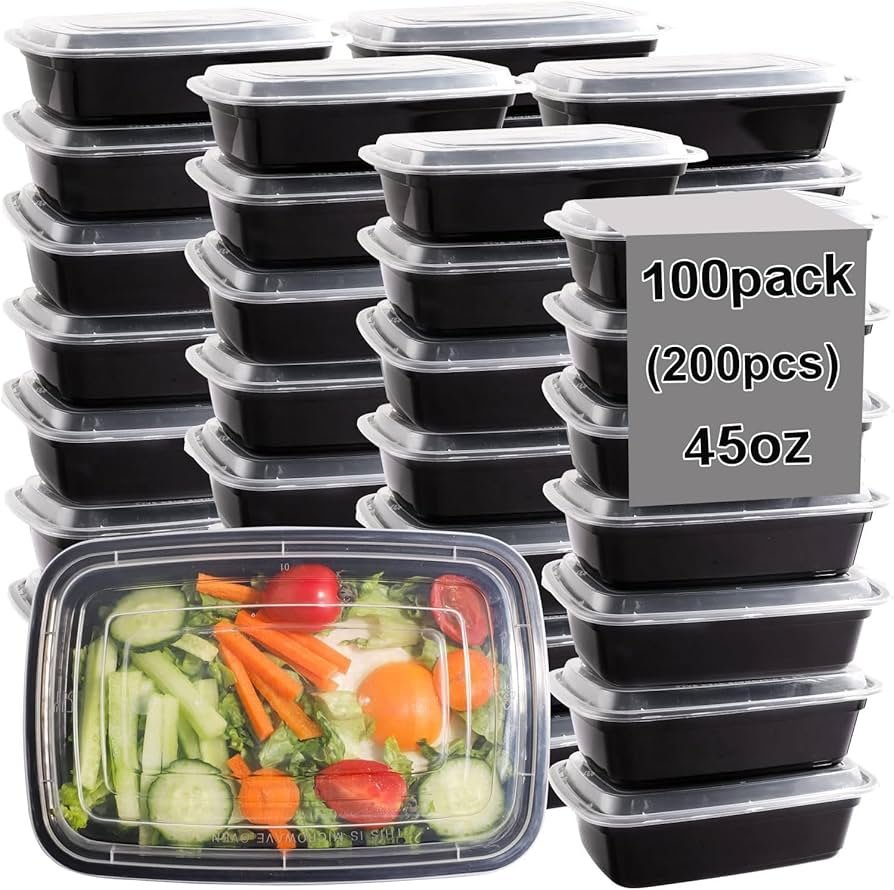
Freshware containers are designed around efficiency, which becomes obvious the moment you start stacking them. Since every container shares the same size and shape, you can build vertical layers quickly without needing to adjust alignment.
This makes them one of the best stackable food storage containers for daily use, especially if you regularly prepare meals in advance. You can stack multiple portions in a compact space while still keeping everything easy to access.
They are also lightweight, which makes handling and rearranging much easier compared to heavier glass options.
Best for: Meal prep and everyday storage
Pros:
- Identical sizing makes stacking effortless and fast
- Lightweight design makes handling multiple containers easy
- Ideal for batch cooking and portioned meals
- Helps save space in both fridge and cabinets
Cons:
- Material is less durable compared to glass containers
- Not suitable for long-term heavy-duty use
- Can wear out faster with frequent use
7. Vtopmart Food Storage Containers
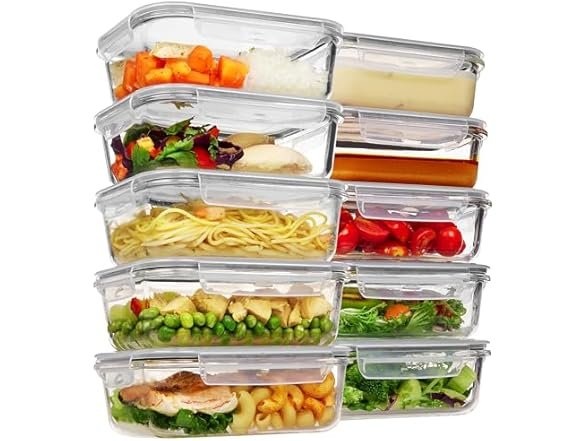
Vtopmart containers focus on keeping things visually clean. Their uniform shape helps everything align neatly, which reduces the cluttered look that often comes from mixing different container types.
They work well if your goal is not just function, but also maintaining a tidy and organized kitchen appearance. Once stacked, the layout feels more intentional and easier to maintain.
However, they are less adaptable when dealing with irregular items that don’t fit the standard shape.
Best for: Clean, organized layouts
Pros: Consistent design, good alignment, space-efficient
Cons: Less flexible, moderate durability
8. Razab Glass Food Storage Containers
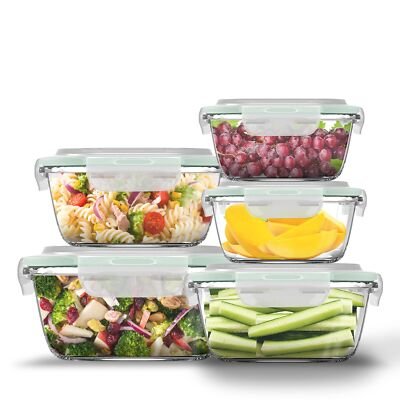
Razab containers focus on durability and structure. The solid glass construction provides a stable base, allowing containers to stack securely without shifting.
Once stacked, the layers tend to stay in place, which reduces the need for constant adjustments. That makes them one of the best stackable food storage containers if your goal is to build a long-term, reliable storage system.
They are particularly suitable for users who prefer a more permanent setup rather than frequently reorganizing their kitchen.
Best for: Durable, long-term storage
Pros:
- Strong glass construction provides excellent stability
- Stacks securely without slipping or shifting
- Suitable for long-term use in structured setups
- Maintains alignment even with regular use
Cons:
- Heavier than plastic alternatives
- Requires more careful handling
- Less convenient for quick, frequent movement
How to Choose the Right Stackable Containers
Choosing the best stackable food storage containers depends on how you use your kitchen space.
Start with your space.
If your cabinets are tall but underused, focus on containers that stack efficiently to maximize vertical storage. Many small kitchens waste space simply because containers don’t align well when stacked.
Next, keep your setup consistent.
Using too many different shapes or sizes creates gaps that reduce efficiency. A more uniform set of containers makes stacking easier and helps maintain structure over time.
It’s also important to think in systems, not individual pieces.
Buying containers one by one often leads to clutter. Instead, aim to build a setup where everything works together — especially if you’re organizing a full pantry or cabinet.
Finally, match each type of container to how you use it.
For example, airtight containers work best for pantry items like flour or cereal, while open bins are more practical for fridge storage or frequently used items. In cabinets, modular containers can help create a cleaner and more structured layout.
When these elements come together, your kitchen becomes easier to manage without needing more space.
Why Stackable Containers Work So Well
The reason stackable kitchen storage containers work so effectively is simple — they reduce friction.
In a cluttered kitchen, you’re constantly moving things around just to access what you need. Items get buried, space gets wasted, and everyday tasks take longer than they should.
Stackable containers solve this by creating structure.
Instead of spreading items out, you organize them into layers that are easy to see and access. This reduces unnecessary movement and makes your kitchen feel more intuitive to use.
Over time, this small change has a big impact.
Less clutter.
Less time spent searching.
More control over your space.
Common Mistakes to Avoid
Even with the right containers, a few common mistakes can reduce their effectiveness.
One of the biggest issues is mixing too many different sizes and shapes. This creates gaps and makes stacking unstable, which defeats the purpose of using stackable containers in the first place.
Another mistake is ignoring vertical space.
Many people still organize items side by side, even when using stackable containers. If you’re not building upward, you’re not getting the full benefit.
It’s also easy to underestimate how much lids affect storage.
Bulky or incompatible lids can take up extra space and disrupt stacking, especially in smaller cabinets.
Avoiding these mistakes will make a bigger difference than simply buying more containers.
FAQ
Are stackable containers worth it?
Yes — especially in small kitchens where vertical space is often underused. They help you maximize storage without adding anything new.
What size should you choose?
Stick to two or three consistent sizes. This makes stacking easier and keeps your setup organized over time.
Are they better than regular containers?
For small kitchens, they usually are. Stackable containers allow you to use vertical space more effectively, which is often the biggest limitation.
With the right setup, the best stackable food storage containers can completely transform how your kitchen is organized and used every day.